
A million followers look impressive on a presentation. But if none of them care about your product, what exactly did you buy?
Influencer marketing works when audience + creator + brand + message make sense together. Not when a spreadsheet has the biggest number in the follower column.
What Is Influencer Marketing?
Influencer marketing is a collaboration between brands and creators who have established attention, credibility or influence with a particular audience.
That creator could have: 5,000 followers. 50,000 followers. 500,000 followers. Or several million.
Size matters. But relevance matters more.
Nano, Micro, Macro or Celebrity?
Different campaigns require different levels of influence.
- Nano Influencers: Smaller communities can sometimes provide strong authenticity and local relevance.
- Micro Influencers: Useful for niche audiences, regional communities and specialised categories.
- Macro Influencers: Provide broader reach and established content capability.
- Celebrity Influencers: Can create enormous awareness and cultural impact, but require the right strategic fit and investment.
There is no universally "best" category. The right question is: Who can influence the audience we actually want?
Hyderabad Has Its Own Creator Ecosystem
Hyderabad provides a particularly interesting influencer landscape. Telugu creators operate across food, technology, fashion, beauty, fitness, travel, entertainment, education, finance and lifestyle.
For brands targeting Telangana and Andhra Pradesh, regional-language creators can offer cultural familiarity that national campaigns sometimes miss. For brands targeting India more broadly, the strategy can expand into creators across markets and languages. Local relevance and national reach don't have to compete.
The Influencer Must Fit the Brand
Imagine a premium wellness brand partnering with a creator whose content and audience have no connection to wellness. Large reach. Low relevance. Now imagine a smaller creator whose followers actively trust their recommendations within that category. Smaller reach. Potentially stronger influence.
That's why our shortlisting process should consider more than follower counts: Audience Relevance + Geography + Language + Engagement + Content Quality + Brand Fit + Credibility + Previous Collaborations + Platform + Campaign Objective
Don't Over-Script Creators
One of the fastest ways to make influencer marketing feel like advertising is to hand a creator a corporate script and ask them to memorise it. Creators became influential because audiences respond to their way of communicating.
Brands need message control. Creators need creative freedom. The best collaboration usually sits between the two.
Influencer Marketing Can Do More Than Awareness
Campaign objectives may include:
- Brand awareness
- Product launches
- Store launches
- Restaurant promotions
- App installs
- Website traffic
- Lead generation
- Product demonstrations
- Reviews
- Event amplification
- UGC creation
- Social proof
- E-commerce sales
- Regional market penetration
Measure More Than Views
One Reel receiving one million views sounds fantastic. But what did those views achieve?
Depending on the campaign, meaningful measurements may include: Reach → Engagement → Video Completion → Profile Visits → Website Visits → Leads → Coupon Usage → Sales → Cost per Acquisition
Influencer marketing becomes much more useful when it moves from: "How many views did we get?" to: "What business outcome did the collaboration contribute to?"
Influencer Marketing at AASTHAA MEDIAVERSE
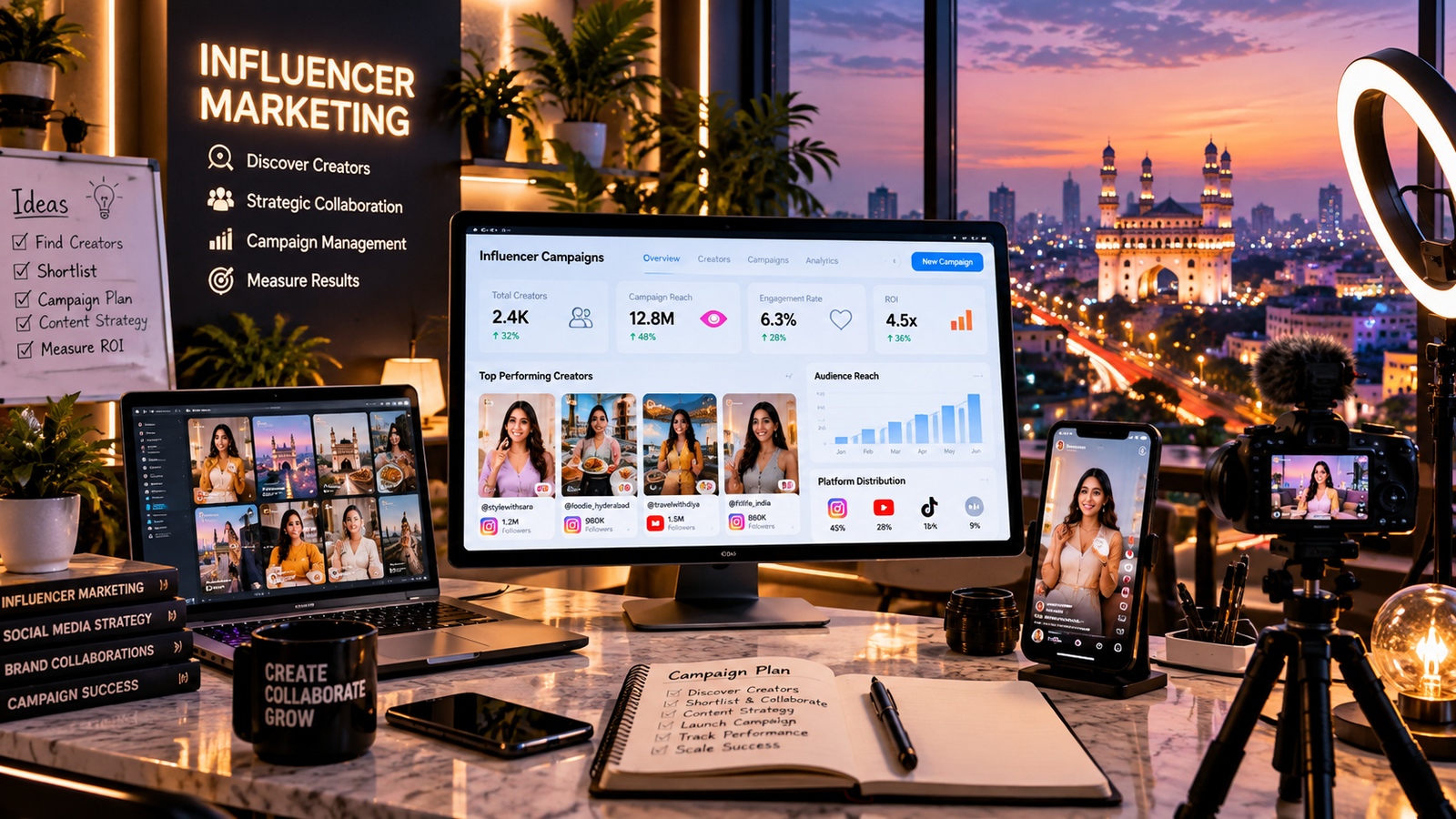
Our campaign approach can include: Campaign Objective → Audience Definition → Creator Discovery → Shortlisting → Brand Fit Evaluation → Outreach → Collaboration Planning → Brief → Content Coordination → Campaign Launch → Amplification → Tracking → Reporting
And where needed, influencer content can connect directly with Meta advertising, Reel marketing, performance marketing and broader campaign strategy.